
Penile Squamous Cell Carcinoma in Young Adults Presenting with Ulceration and Nodal Involvement: Two Case Reports
A Case Report
DOI:
https://doi.org/10.69885/pju.v3i1.101Keywords:
Penile squamous cell carcinoma; Penile cancer; Inguinal lymph node metastasis; Young adult; Case report.Abstract
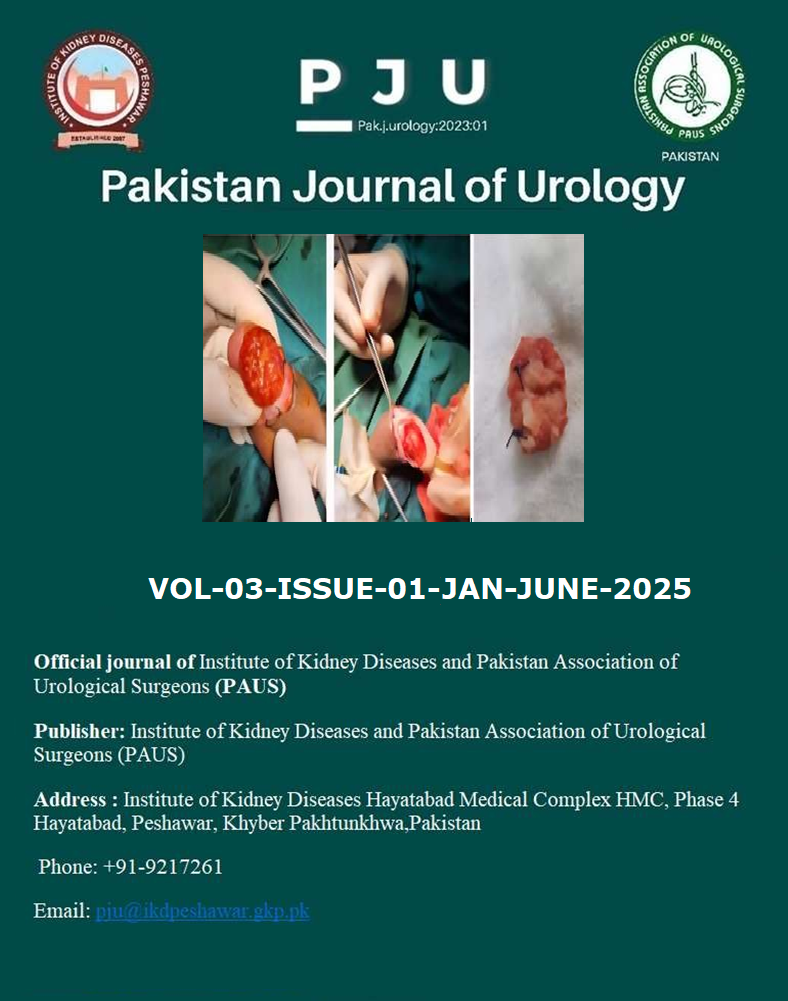
Introduction: Penile squamous cell carcinoma (PSCC) is an uncommon malignancy, particularly among young adults. Delayed diagnosis may result in local invasion, lymph node metastasis, and adverse oncological outcomes. We report two cases of penile squamous cell carcinoma occurring in unusually young circumcised males.
Case Presentation: Case 1 involved a 26-year-old circumcised male who presented with a fungating ulcerative lesion involving the glans penis and distal shaft, associated with bilateral inguinal lymphadenopathy. Histopathological examination confirmed moderately differentiated squamous cell carcinoma with metastatic involvement of bilateral inguinal lymph nodes. The patient underwent partial penectomy with bilateral inguinal lymph node dissection and remained disease-free during one year of follow-up. Case 2 involved a 24-year-old circumcised male who presented with a localized ulcerative lesion on the glans penis. Histopathology confirmed squamous cell carcinoma without evidence of nodal involvement. The patient was successfully treated with wide local excision and remained disease-free after 24 months of follow-up.
Conclusion: Penile squamous cell carcinoma can occur in young adults despite its rarity. Persistent penile lesions should prompt early biopsy and appropriate staging investigations regardless of patient age. Early diagnosis and timely surgical management remain essential for improving clinical outcomes and reducing disease-related morbidity.
Downloads
Published
How to Cite
Issue
Section
License
Copyright (c) 2025 Khushbakht, Liaquat Ali -, Dayan Ur Rehman

This work is licensed under a Creative Commons Attribution 4.0 International License.
 ISSN: 3005-7582 (Online )
 ISSN: 3005-7574 (Print )